
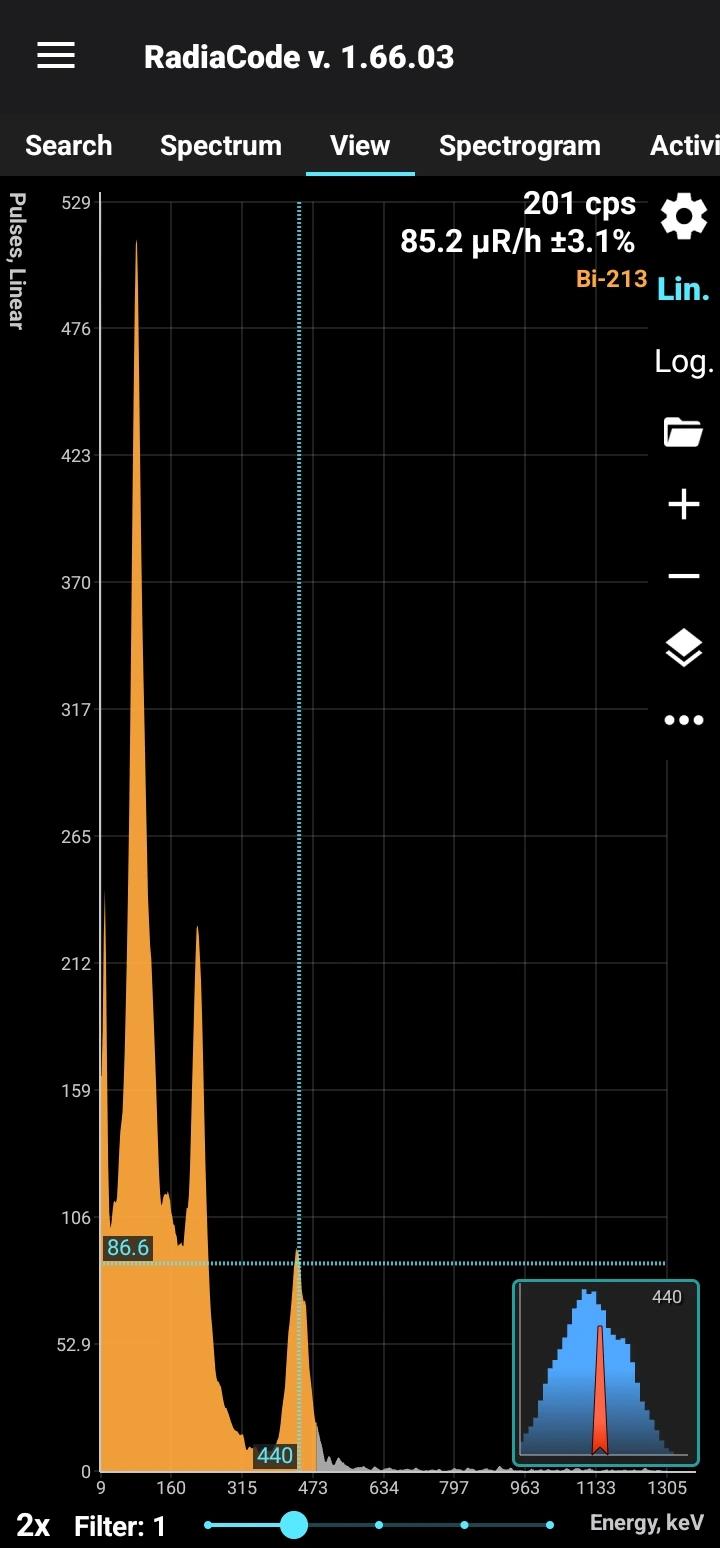
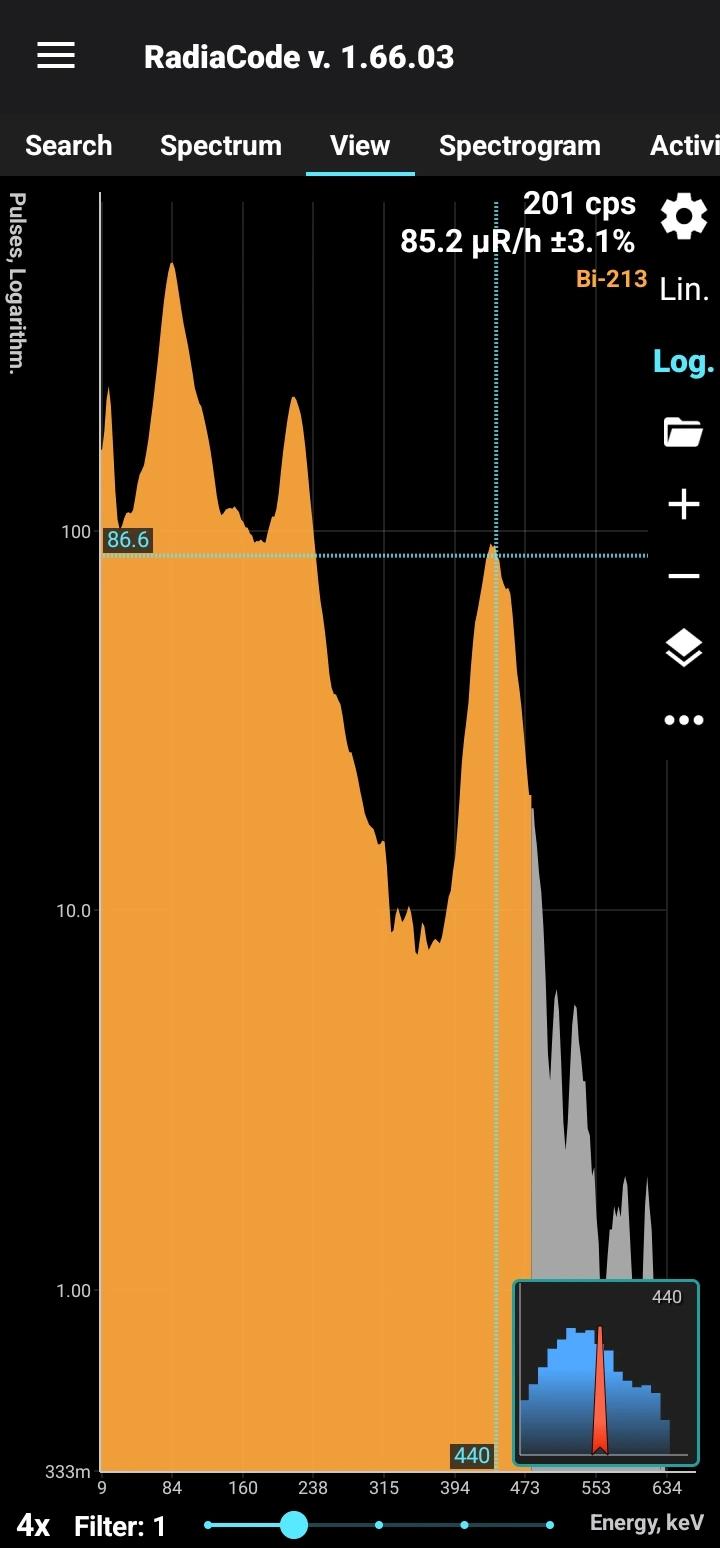
Bismuth-213 (Bi-213) is a short-lived radioactive isotope of bismuth with a half-life of about 45.6 minutes. It decays mainly by beta-minus emission to polonium-213, which rapidly undergoes alpha decay. A smaller fraction of Bi-213 decays directly by alpha emission. Its decay produces a prominent gamma ray at approximately 440 keV, making Bi-213 detectable by gamma spectroscopy.

Bi-213 is primarily used and studied for targeted alpha therapy (TAT). It can be attached to molecules designed to selectively target cancer cells, delivering highly energetic alpha radiation over a very short distance. Bi-213 has been investigated for the treatment of leukemia, lymphoma, neuroendocrine tumors, and other cancers.

Bi-213 does not occur naturally in significant quantities because of its short half-life. It is a daughter product in the decay chain of Ac-225 and can be obtained from Ac-225/Bi-213 radionuclide generators for medical and research applications. It can therefore be encountered in facilities working with Ac-225, radiopharmaceutical laboratories, and nuclear medicine research centers.
Bi-213
Bismuth-213
Half-life: 45.6 minutes Main emission lines: 440 keV
Decay mode Alpha
Alpha
| Energy, keV | Intensity, % |
| 5875 | 1.959 |
| 5558 | 0.181 |
Decay mode Beta-
Beta-
| Avg. En., keV | Intensity, % | Decay En., keV |
| 491.8 | 66.8 | (1422) |
| 320 | 30.1 | (982) |
Gamma
| Energy, keV | Intensity, % |
| 440.45 | 25.9 |
| 292.8 | 0.419 |
| 807.36 | 0.289 |