
Tin-117m (Sn-117m) is a metastable radioactive isotope of tin with a half-life of about 13.8 days. It decays by isomeric transition to stable Sn-117, emitting a characteristic gamma ray at approximately 159 keV. Its decay also produces conversion electrons and characteristic tin X-rays, giving Sn-117m a distinctive low-energy radiation spectrum.

Sn-117m is primarily studied for therapeutic applications in nuclear medicine. Its conversion electrons deposit their energy over a short distance, making the isotope useful for delivering localized radiation while limiting exposure to surrounding tissue. It has been investigated for applications including treatment of bone metastases and other targeted radionuclide therapies.

Sn-117m does not occur naturally in significant quantities and is produced artificially in nuclear reactors or particle accelerators. It can be produced by irradiating suitable tin or antimony targets, followed by separation and purification when required. In practice, Sn-117m is mainly encountered in isotope-production facilities, nuclear medicine research, and specialized radiopharmaceutical applications.
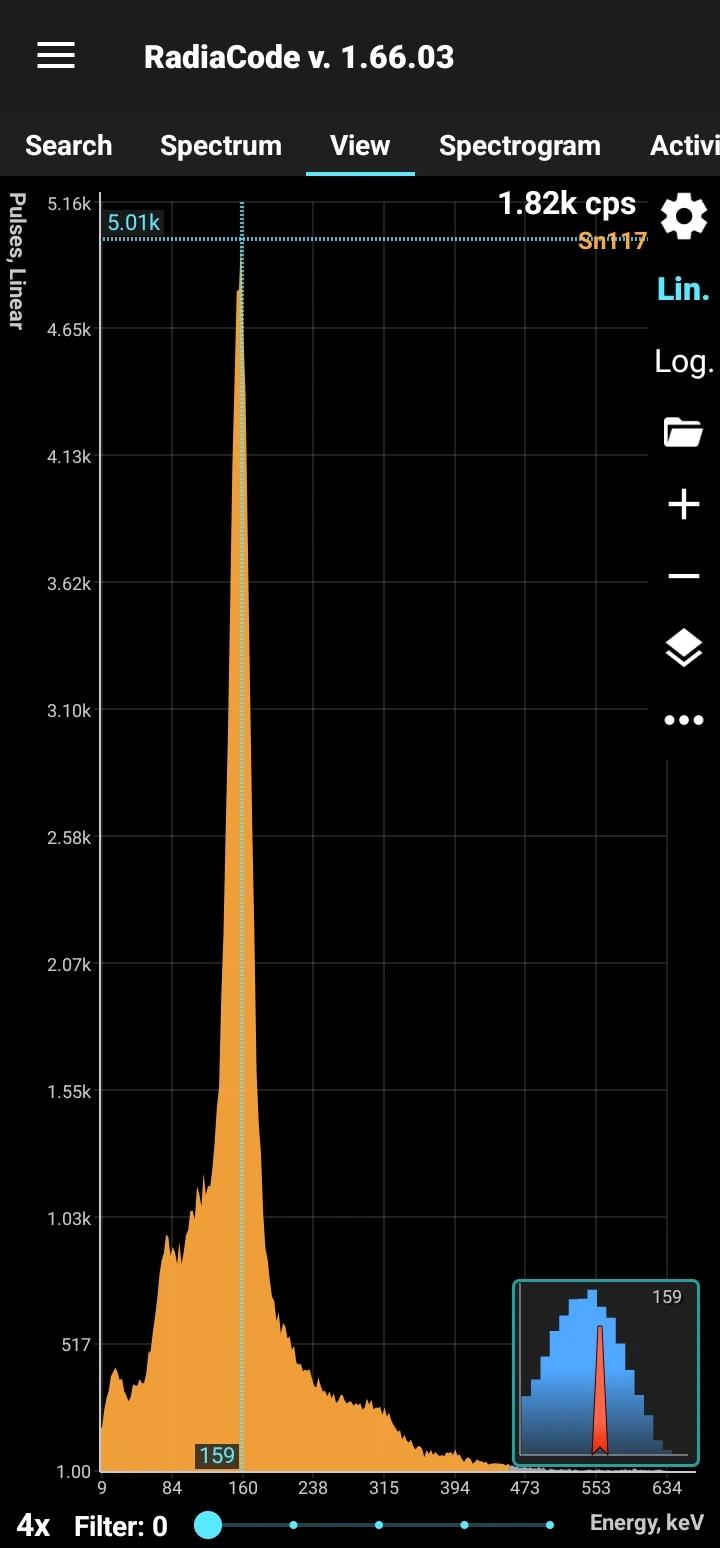
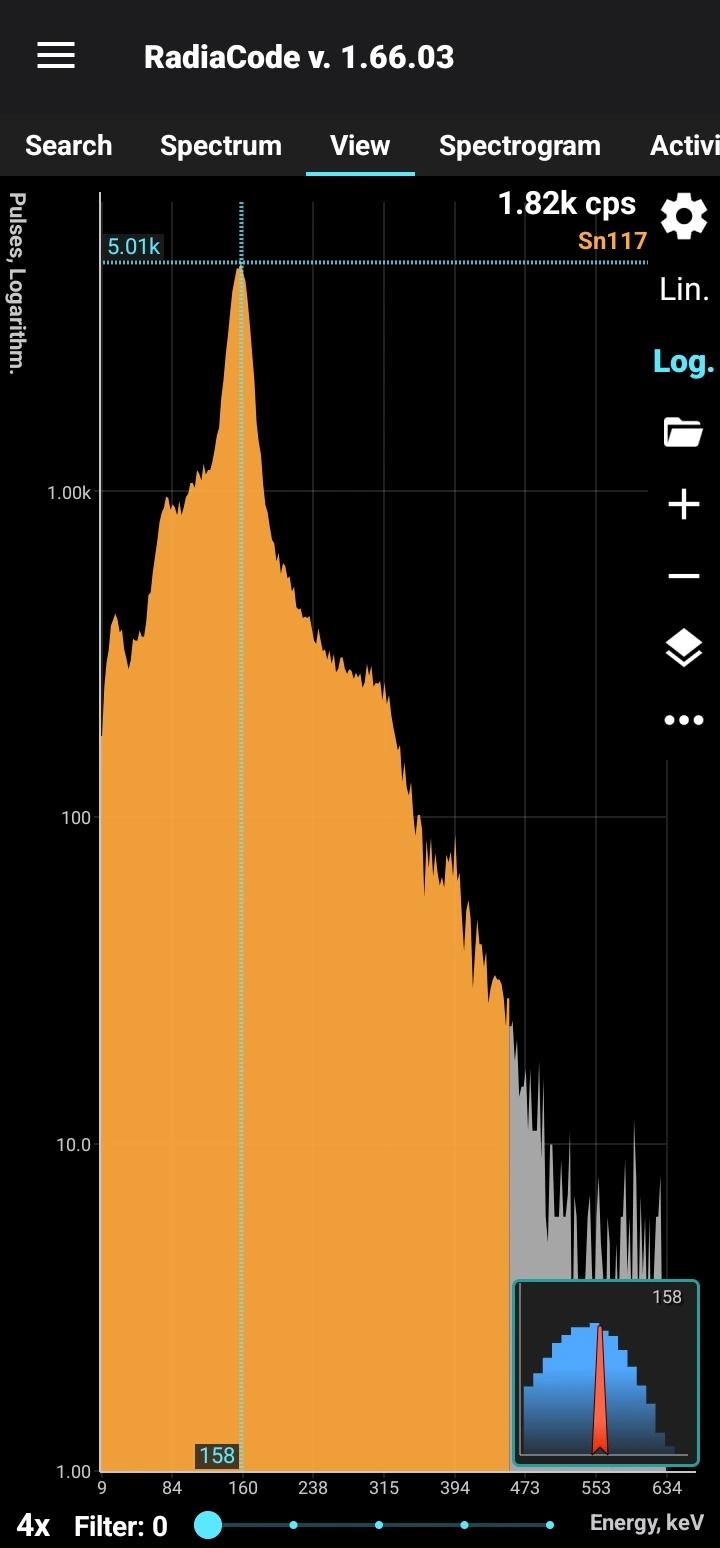
Sn-117m
Tin-117m
Half-life: 13.8 days Main emission lines: 159 keV
Decay mode IT
Gamma
| Energy, keV | Intensity, % |
| 158.56 | 86.4 |
| 156.02 | 2.113 |
X-rays
| Energy, keV | Intensity, % |
| 25.271 | 35.4 |
| 25.044 | 18.9 |
| 28.443 - 29.176 | 11.97 |
| 28.443 - 28.715 | 10 |
| 3.045 - 4.462 | 7.4 |
| 29.102 - 29.111 | 1.97 |