
Astatine-211 (At-211) is a short-lived radioactive isotope of astatine with a half-life of about 7.2 hours. It decays through two main pathways: alpha emission to bismuth-207 and electron capture to polonium-211, which rapidly undergoes alpha decay. As a result, each At-211 decay ultimately produces one high-energy alpha particle, while characteristic X-rays and gamma emissions can also be observed.

At-211 is primarily studied for targeted alpha therapy (TAT) in nuclear medicine. It can be attached to molecules that selectively target cancer cells, allowing highly energetic alpha radiation to be delivered over a very short distance. Its short half-life and lack of long-lived alpha-emitting daughter products make At-211 particularly interesting for experimental radiopharmaceuticals and cancer treatment research.

At-211 does not occur naturally in significant quantities because of its very short half-life. It is produced artificially in particle accelerators, most commonly by bombarding bismuth-209 targets with alpha particles. Because At-211 decays within hours, it is mainly encountered near specialized cyclotron facilities, radiopharmaceutical laboratories, and medical research centers shortly after production.
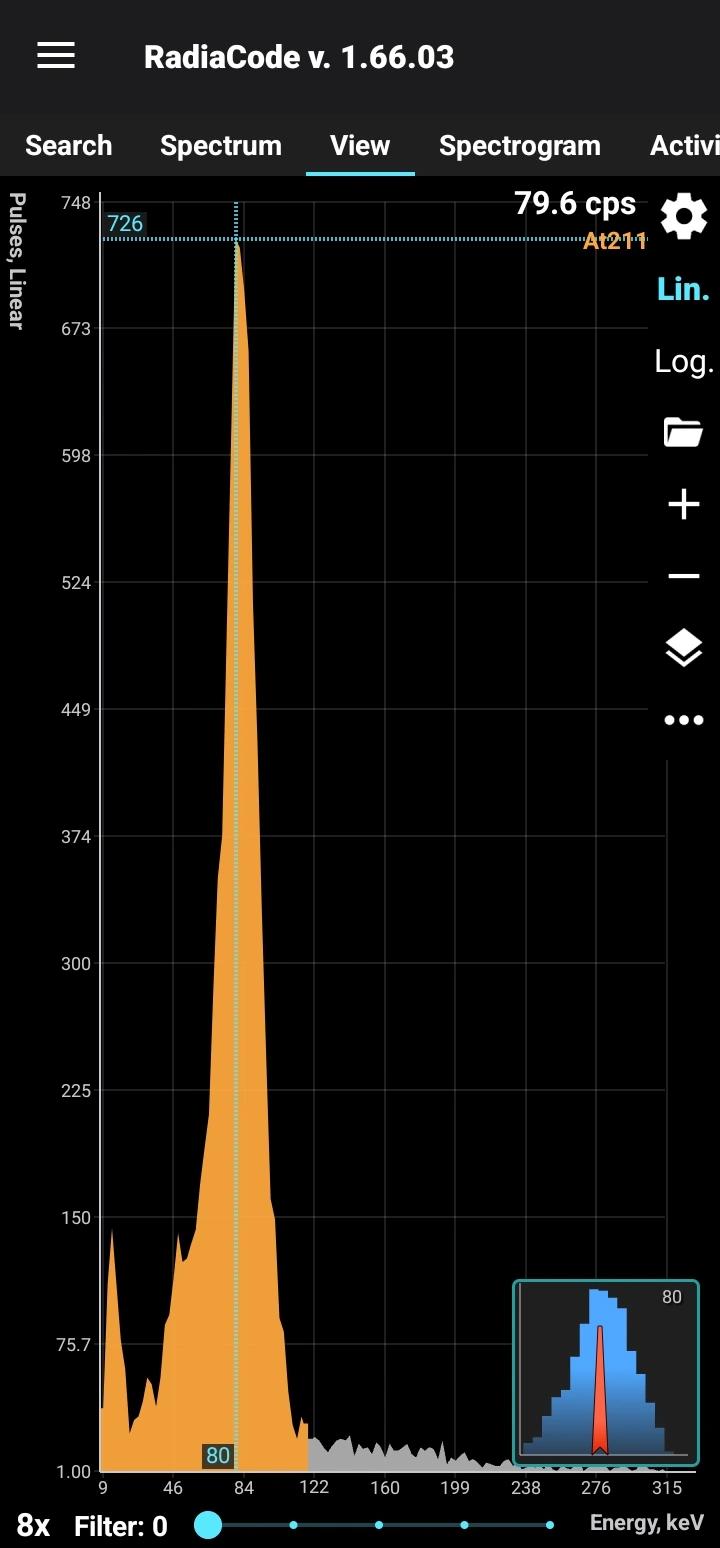
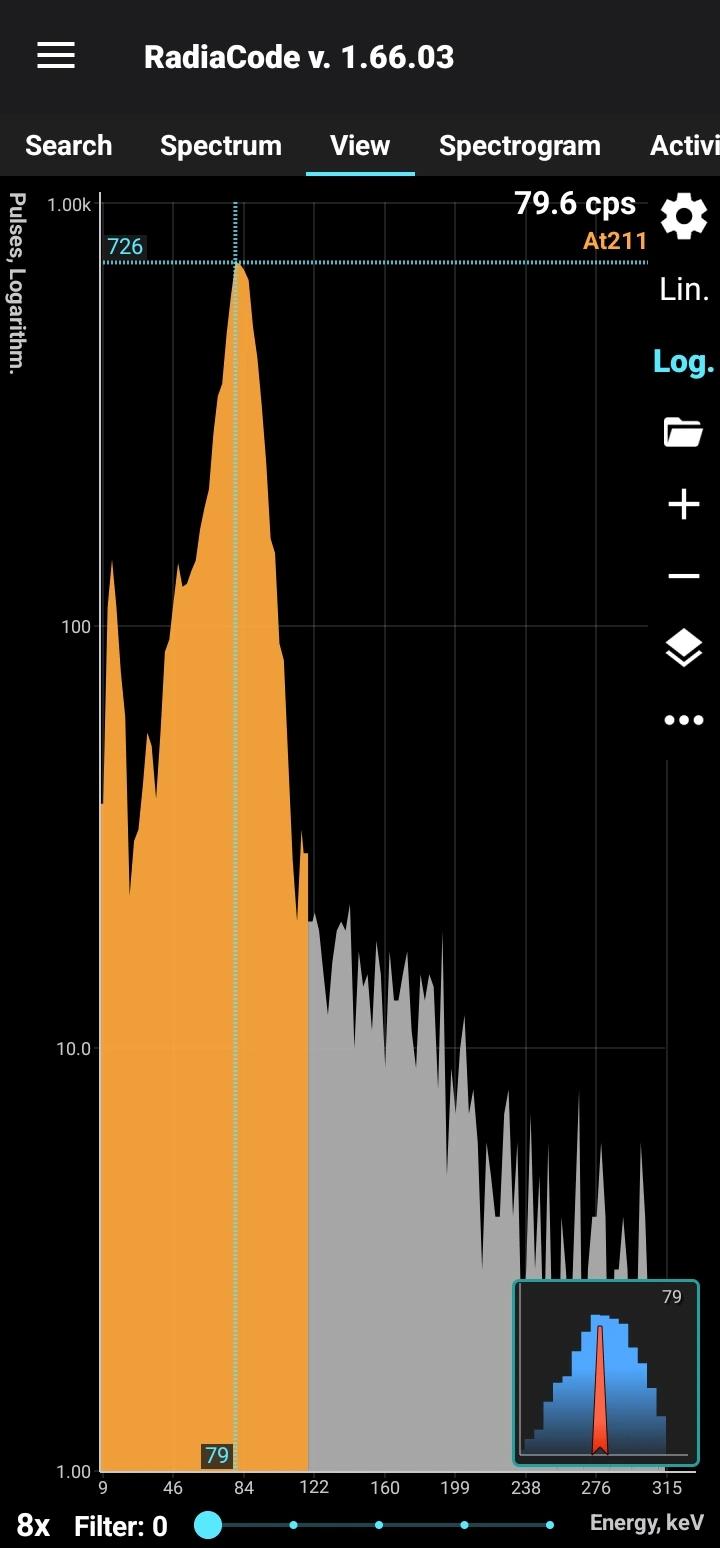
At-211
Astatine-211
Half-life: 7.2 hours Main emission lines: 79 keV
Decay mode Alpha
Alpha
| Energy, keV | Intensity, % |
| 5869.5 | 41.8 |
Gamma
| Energy, keV | Intensity, % |
| 669.78 | 0.0037 |
Decay mode ec
Gamma
| Energy, keV | Intensity, % |
| 687.0 | 0.261 |
X-rays
| Energy, keV | Intensity, % |
| 79.290 | 21.07 |
| 9.655 - 16.929 | 18.6 |
| 76.862 | 12.65 |
| 89.254 - 92.628 | 9.51 |
| 89.254 - 90.419 | 7.25 |
| 92.248 - 92.382 | 2.26 |